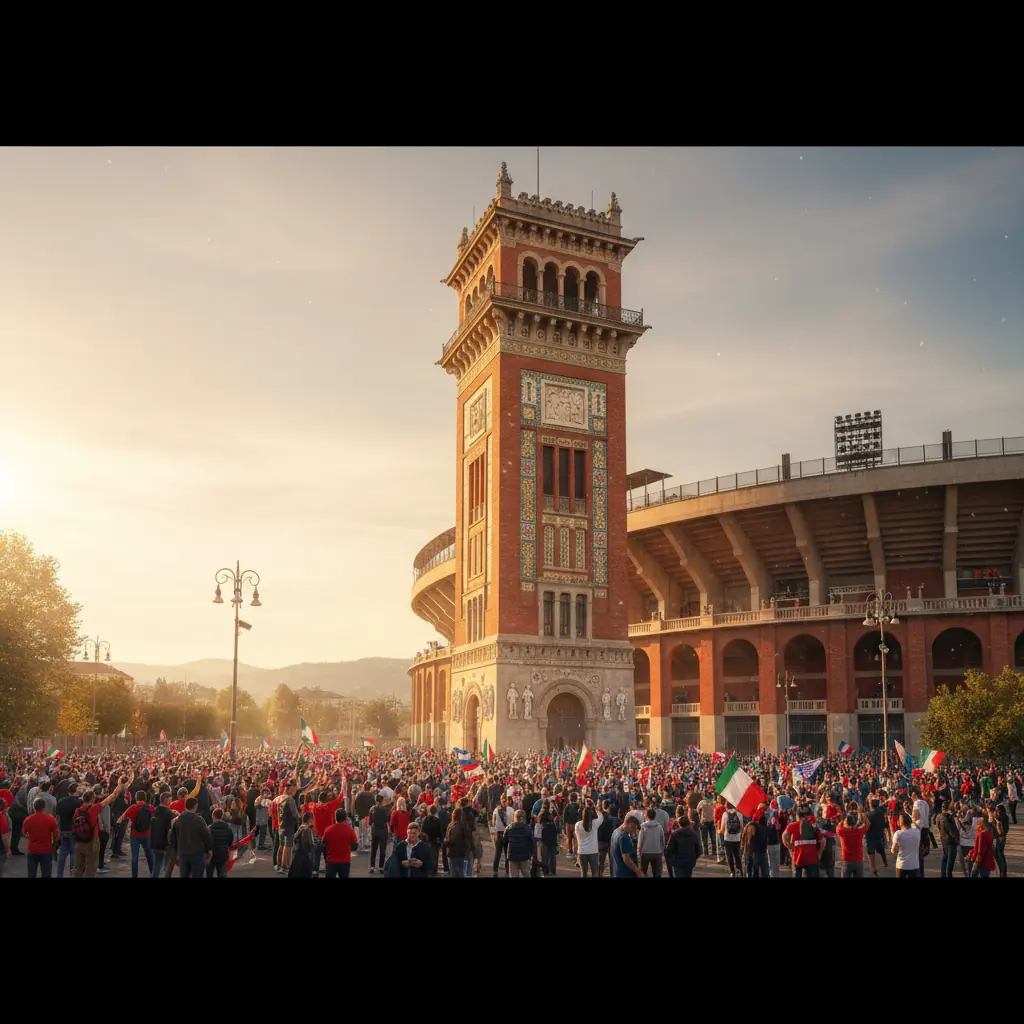
Imagine a crisp autumn evening in Bologna, the air thick with anticipation. The roar of the crowd builds, a wave of passion washing over the Stadio Renato Dall’Ara. This isn’t just a stadium; it’s a living, breathing monument, a testament to Bologna’s unwavering spirit and the beautiful game that binds Italy together. The Dall’Ara stands as a stalwart guardian, its concrete shell echoing with the triumphs and heartbreaks of generations of fans.
More than just bricks and mortar, the Stadio Renato Dall’Ara is a symbol deeply embedded in the city’s identity. It represents the highs and lows of Serie A football, the echoes of legendary players, and the fervent dedication of the Bolognese faithful. From its elegant design to its vibrant atmosphere, the stadium encapsulates the essence of Italian football culture.
This article delves into the rich tapestry of the Stadio Renato Dall’Ara, exploring its fascinating history, architectural nuances, the passionate fan culture it fosters, and the challenges it faces in the modern era. Prepare to journey through time and discover the soul of Bologna’s beloved Stadio Renato Dall’Ara.
A Historical Overview of Stadio Renato Dall’Ara
Early Years and Fascist Roots
Stadio Renato Dall’Ara, originally known as Stadio Littoriale, stands as a testament to a pivotal period in Italian history. Its construction, initiated in the 1920s and completed in 1927, occurred during the height of Benito Mussolini’s fascist regime. The stadium’s architecture, reflecting the monumental style favored by the Fascists, was intended to project an image of power and national pride. Stadio Littoriale was more than just a sports venue; it was a symbol of the era, designed to host mass rallies and showcase the strength of the regime. The stadium quickly became an integral part of Bologna’s identity, even as its initial purpose was deeply entwined with the political ideology of the time. It was built to impress and intimidate, to house big spectacles, and to be a point of pride in a quickly changing Italy.
Post-War Era and Renaming
Following the end of World War II and the fall of Fascism, Italy underwent a period of significant transformation. As the nation grappled with its past and looked towards a new future, Stadio Littoriale also experienced a shift in identity. In 1983, the stadium was renamed Stadio Renato Dall’Ara in honor of Renato Dall’Ara, the long-serving and highly respected president of Bologna Football Club (Bologna FC). This renaming marked a symbolic break from the stadium’s fascist origins and acknowledged Dall’Ara’s significant contribution to the city’s beloved football team. The post-war era saw the stadium evolve into a more inclusive and community-focused space, hosting not only football matches but also concerts and other public events. The stadium moved away from being a symbol of governmental power and embraced becoming a symbol of the people.
Architectural Grandeur and Unique Features
The Stadio Renato Dall’Ara stands as a testament to Italian stadium architecture, blending historical significance with functional design. Its most defining feature is undoubtedly the Torre di Maratona, a structure that not only dominates the stadium’s skyline but also serves as a poignant reminder of Bologna’s past. Beyond the tower, the stadium’s architectural nuances, from its carefully considered layout to its distinctive stand structures, contribute to its status as a Bologna landmark.
The Iconic Torre di Maratona
The Maratona Tower, or Torre di Maratona, embodies the stadium’s historical and architectural essence. Its construction reflects the architectural period, serving as a powerful symbol. The tower contributes significantly to the stadium’s visual identity. Its presence elevates the Renato Dall’Ara beyond a mere sporting venue to a landmark steeped in Bologna’s history.
Other Notable Architectural Aspects
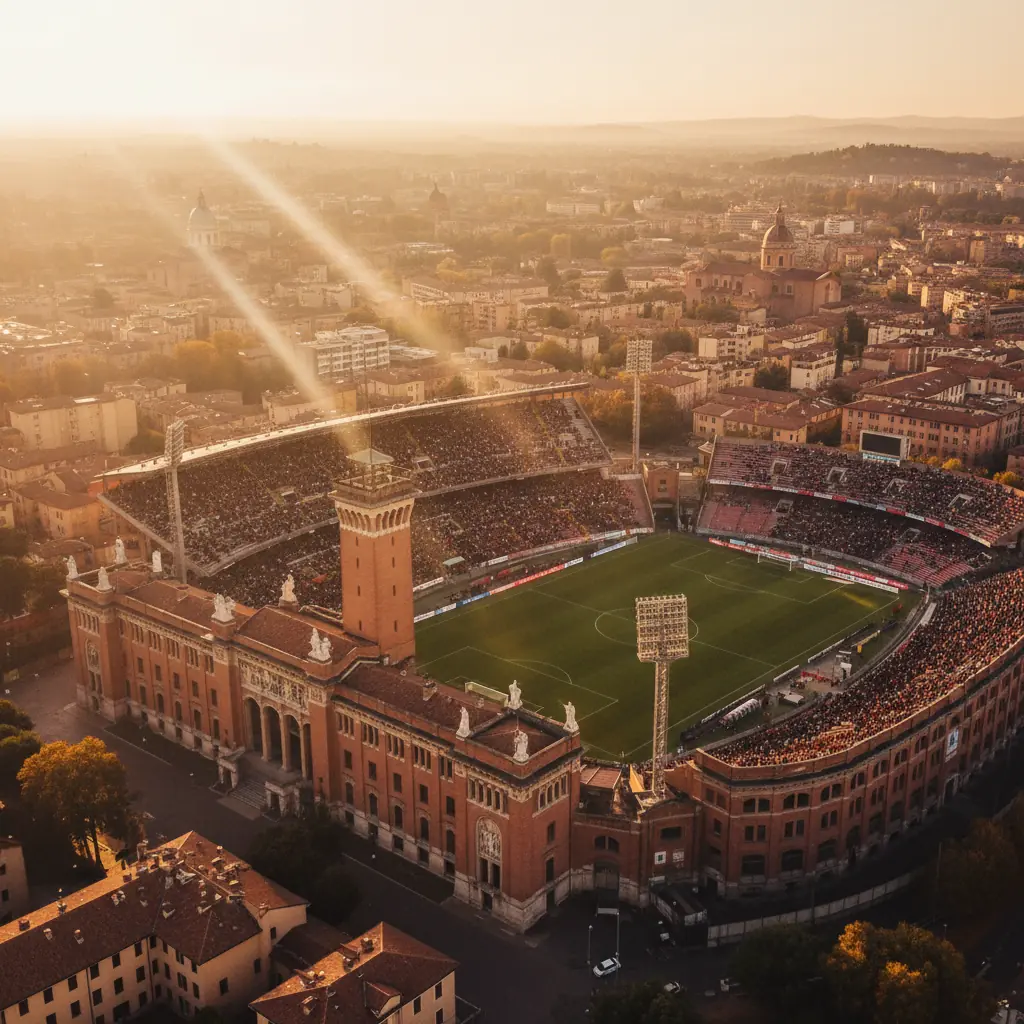
Beyond the Torre di Maratona, the Stadio Renato Dall’Ara boasts other notable architectural elements. The stadium facades, while perhaps less imposing than the tower, contribute to the overall aesthetic appeal. The design and structure of the stands are also significant architectural features. Each element combines to create a complete and compelling architectural package.
The Heartbeat of Bologna: The Fan Experience
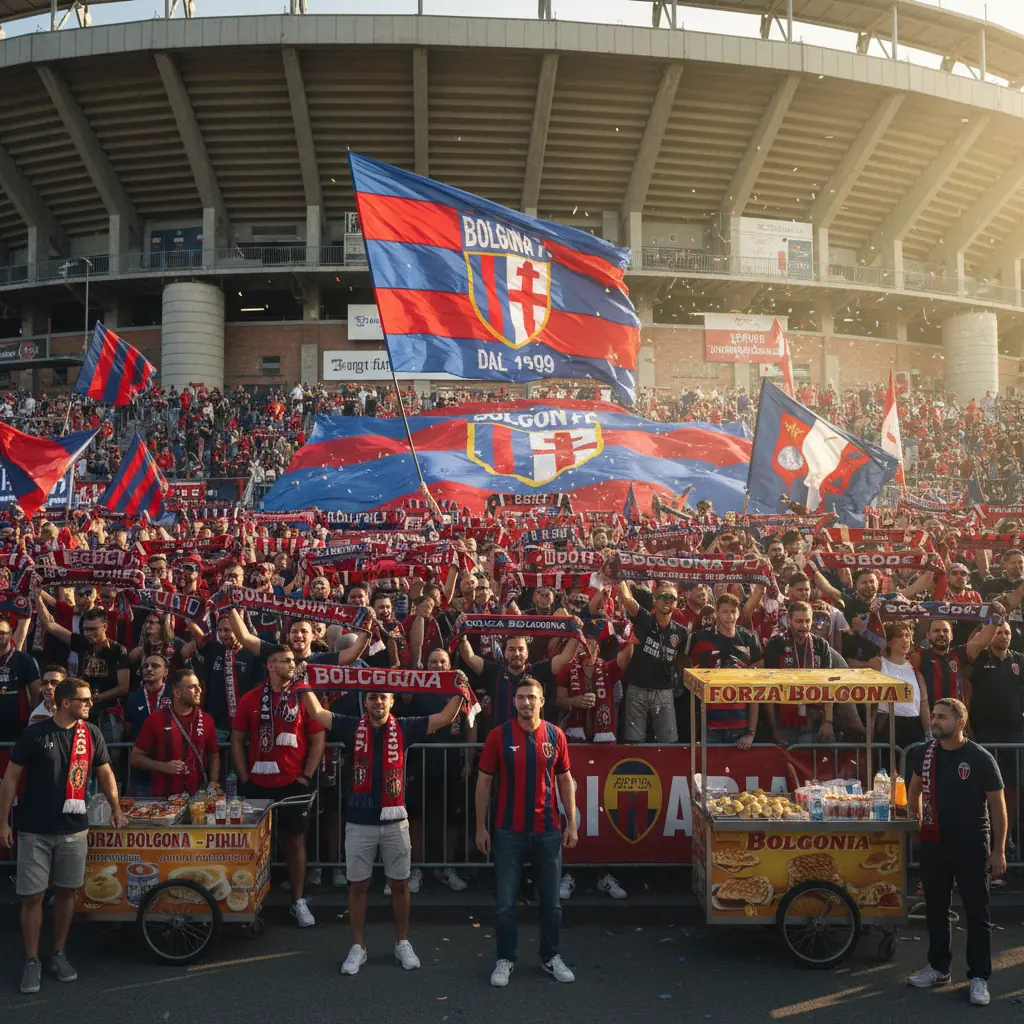
Stadio Renato Dall’Ara isn’t just a stadium; it’s a cauldron of passion where the soul of Bologna comes alive. On matchday, the air crackles with anticipation, a unique Serie A atmosphere fueled by the unwavering devotion of the Bologna fans. From the moment you approach the stadium, you’re swept up in a sea of red and blue, the club’s colors proudly displayed on scarves, flags, and painted faces. The energy is infectious, a potent mix of hope, excitement, and nervous energy that only Italian football can deliver. It’s more than just a game; it’s a cultural event, a shared experience that binds generations of Bolognesi together. The shouts, the songs are showing how fans take the club into their hearts.
Curva Bulgarelli: The Heart of Bologna Support
No exploration of the Bologna fan experience is complete without acknowledging the Curva Bulgarelli. This is the spiritual home of the Bologna ultras, the die-hard supporters who set the tone for the entire stadium. Their unwavering support, deafening chants, and breathtaking displays of choreography create an intimidating atmosphere for opposing teams while simultaneously inspiring the home side. Being in Curva Bulgarelli is not just witnessing a match; it’s participating in a ritual, a collective expression of love and loyalty for Bologna FC. It represents the true spirit of Bologna FC.
Matchday Traditions and Rituals
The matchday experience extends far beyond the stadium’s gates. Hours before kickoff, the streets surrounding the Renato Dall’Ara transform into a vibrant tapestry of food vendors, merchandise stalls, and passionate supporters. Fans gather in local bars and trattorias, fueling up with traditional Bolognese cuisine and sharing predictions for the upcoming match. As the clock ticks down, the atmosphere intensifies, with singing often starting long before the players emerge from the tunnel. Many fans have specific rituals, from wearing a lucky scarf to meeting at the same pre-match spot, all contributing to the unique magic of a Bologna matchday. Also the colorful expressions like the flags and banners are filling the streets with the team colors.
Renovation Turmoil and Uncertain Future
The Original Renovation Plans
Ambitious plans were once set in motion to breathe new life into the Stadio Renato Dall’Ara. The renovation project was envisioned as a comprehensive overhaul, designed to modernize the aging structure and enhance the overall fan experience. Proposals included significant upgrades to seating, improved hospitality areas, and cutting-edge technological integrations that would bring the stadium in line with contemporary standards. Capacity was also slated for adjustment, carefully balancing increased seating with optimized sightlines and comfort. The project aimed to transform Renato Dall’Ara into a state-of-the-art venue, worthy of Bologna FC’s passionate fanbase and capable of hosting high-profile international events. It promised a revitalized stadium that respected its historical significance while embracing the future of sports entertainment.
Reasons for Abandonment and Alternatives
Despite the initial enthusiasm, the ambitious renovation project ultimately faced insurmountable obstacles, leading to its abandonment. A primary factor was the escalating construction cost, which soared beyond initial projections, rendering the project financially unviable. Incomplete documentation and bureaucratic hurdles further complicated matters, causing significant delays and uncertainties. The iconic Torre di Maratona, a protected historical landmark within the stadium complex, presented unique challenges, restricting certain renovation options. With the renovation plan scrapped, Bologna FC is now exploring alternative solutions. Among these is the possibility of constructing a brand-new stadium in a different location. This option offers the potential for a purpose-built venue tailored to the club’s specific needs and future ambitions, free from the constraints of the existing structure. However, it also entails significant investment and logistical considerations. The future of Bologna FC’s home remains uncertain as the club weighs its options and seeks a path forward.
Visiting the Dall’Ara: A Practical Guide
Getting to the stadium
Reaching Stadio Renato Dall’Ara is straightforward, with several transportation options available. From Bologna Centrale train station, the easiest way to get to the stadium is by bus. Several bus lines connect the station to the stadium area; lines 21, 37 and 67 are the most direct. The journey takes approximately 20-30 minutes, depending on traffic. If you are arriving at Bologna Airport (BLQ), you can take the Marconi Express train to Bologna Centrale and then transfer to a bus. Alternatively, a taxi from the airport to the stadium will take around 20 minutes. Within the city center, buses and taxis are readily available. Walking is an option but consider the distance, as the stadium is located a few kilometers from the heart of Bologna.
Tickets and practical advice
Securing tickets for a Bologna FC match at Stadio Renato Dall’Ara can be done through several channels. The official Bologna FC website is the primary source for tickets, where you can find information on upcoming matches and purchase tickets online. Tickets are also often available at official Bologna FC stores located in the city center. On match days, tickets may be available at the stadium ticket office, but purchasing in advance is highly recommended to avoid queues and ensure availability. For away fans, tickets are usually allocated and sold through the visiting club and always require FAN ID. When planning your visit, remember that the stadium doesn’t offer any parking, arrive early to allow time for security checks, and enjoy the electrifying atmosphere.
Stadio Renato Dall’Ara: A Lasting Legacy
Enduring Symbol of Bologna
The Stadio Renato Dall’Ara is more than just a venue for football matches; it is a vibrant thread woven into the fabric of Bologna’s history. The stadium stands as a testament to the city’s passion for sport, echoing with the cheers and heartbreaks of generations of fans. Its very stones whisper tales of legendary matches and unforgettable moments, solidifying its place as an enduring symbol of Bologna’s rich cultural tapestry.
Uncertain Future, Indelible Mark
While whispers of potential renovations and modernization plans circulate, casting a veil of uncertainty over its future, the Stadio Renato Dall’Ara’s indelible mark on Bologna and Italian football remains secure. Regardless of what the future holds, the stadium’s legacy is etched in the memories of fans and the annals of Serie A. It is a landmark that will continue to resonate, reminding everyone of the beautiful game’s power to unite and inspire. The Dall’Ara is a powerful landmark for Bologna.